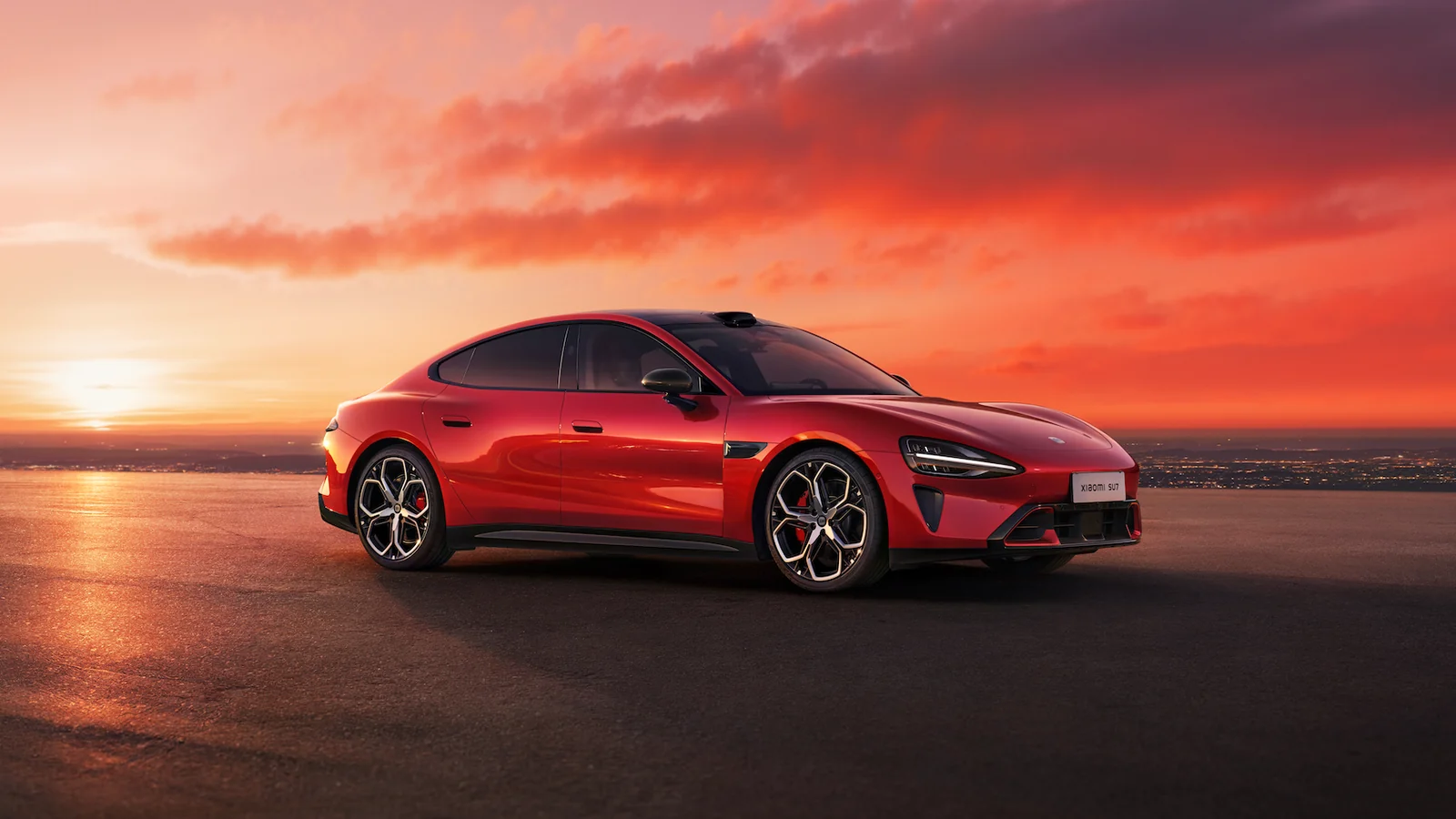
Xiaomi's second quarter results show a company balancing two very different business cycles. Its smartphone operation is still absorbing expensive memory and intense industry competition, but management expects the pace of memory price increases to slow during the second half of 2026. At the same time, electric vehicles are contributing a larger share of group revenue and giving Xiaomi another route to long term growth.
For the three months ended June 30, 2026, Xiaomi reported total revenue of RMB 108.9216 billion, down 6.1 percent from a year earlier. Adjusted net profit was RMB 6.2191 billion, a decline of 42.6 percent. Those figures show why the outlook needs careful language. Xiaomi is not saying that every smartphone cost has already fallen, and the EV operation should not yet be described as a proven profit engine.
The more defensible conclusion is that the pressure may be becoming more manageable while the company's business mix changes. Smartphones remain essential to Xiaomi's scale and connected ecosystem. Vehicles are becoming an increasingly important source of revenue, while software and AI remain important areas of technology investment.
Xiaomi Smartphone Business Faces Cost Pressure
Xiaomi's smartphone revenue was RMB 42.1187 billion in the second quarter, 7.5 percent lower than a year earlier. Shipments declined 26.5 percent to 31.2 million units. Smartphone gross margin fell to 8.5 percent, compared with 11.5 percent in the second quarter of 2025 and 10.1 percent in the first quarter of 2026.
The company attributed the pressure to significantly higher prices for key components, including memory, as well as more intense competition. That distinction matters. A slower increase in memory prices is not the same as an immediate reduction in the amount Xiaomi pays for every component. It also does not guarantee lower retail prices or a rapid recovery in gross margin.
Management nevertheless offered a more constructive view of the second half. Reuters reported that Xiaomi President Lu Weibing said memory costs remained at historically high levels during the quarter, but the rate of increase had slowed and was expected to slow further. He described the most difficult period as having passed and said Xiaomi had adjusted its product mix and launch rhythm. These are management expectations rather than completed results, so future quarters will show whether the anticipated relief reaches the income statement.
One measure already moved in a different direction from volume. Smartphone average selling price rose 25.9 percent year on year to RMB 1,351, which Xiaomi described as a record. A richer product mix and higher average price therefore offset part of the shipment decline, although they did not prevent smartphone revenue and margin from falling.
Xiaomi EV Business Becomes a New Growth Engine
Xiaomi's smart electric vehicle, AI and other new initiatives segment generated RMB 24.8958 billion of revenue in the quarter, up 17.1 percent year on year. It represented 22.9 percent of group revenue, compared with 18.3 percent a year earlier. Within that combined segment, smart electric vehicle sales contributed RMB 23.9 billion, an increase of 15.9 percent.
Vehicle deliveries reached 104,199 units, 28.2 percent above the 81,302 delivered in the comparable quarter. Xiaomi said the increase in vehicle revenue was mainly driven by higher deliveries, partly offset by a lower average selling price. Vehicle average selling price declined 9.6 percent to RMB 229,312, primarily because the higher priced SU7 Ultra represented a smaller proportion of deliveries.
The scale of the Xiaomi electric car business is also becoming more visible over time. The company said cumulative deliveries of the SU7 series had exceeded 500,000 vehicles by August 17, 2026. SU7 was Xiaomi's first car and remains the foundation of its automotive operation. A new generation SU7 followed in March 2026, while the company has continued to broaden its vehicle development programme.
Growth does not mean the segment is free of financial pressure. The combined EV, AI and other new initiatives segment recorded a 19.2 percent gross margin, down from 26.4 percent a year earlier, and an operating loss of RMB 2.6 billion. Those are results for the combined segment, not a separately disclosed gross margin or operating loss for the vehicle business alone. It is therefore accurate to call EVs a growing revenue pillar, but premature to say that car manufacturing has already become Xiaomi's established profit engine.
Xiaomi Expands Its Role in the Global Electric Vehicle Market
Xiaomi enters the automotive market with a background that differs from that of a traditional carmaker. Its HyperOS strategy is built around what the company calls a Human × Car × Home ecosystem. Official SU7 material describes cross-device links among the car, smartphones, tablets and connected home products. Experience in consumer software, AI, electronics and user interfaces may give Xiaomi a differentiated way to design the cabin and ownership experience, although that potential should not be confused with independently proven technological leadership.
This approach also places Xiaomi within a wider wave of Chinese electric vehicles competing through software integration, manufacturing scale, battery choices, driver-assistance features and product configuration. Competitive conditions differ by price band and market, and no single quarterly result establishes a ranking against Tesla, BYD, NIO, Zeekr or established international manufacturers. Buyers studying the broader Chinese market can use the BYD brand page as one separate point of reference rather than treating every Chinese brand as interchangeable.
Xiaomi's global automotive role is still developing. The company plans to enter the European vehicle market in 2027, and it opened an EV research and design centre in Munich in September 2025 to support that preparation. However, Xiaomi has not confirmed in the cited materials which model will launch first, which country will receive it, how it will be priced or what its retail and service network will look like.
The Munich centre is evidence of preparation, not proof that Germany will necessarily be the first sales market. Likewise, a 2027 plan does not mean Xiaomi vehicles are currently available through an official global export programme. Any discussion of international growth must preserve that difference.
What Xiaomi EV Growth Means for Global Car Buyers
For overseas buyers, Xiaomi's progress demonstrates how quickly a consumer technology company can become a material participant in China's vehicle market. It also shows why interest in Chinese electric vehicles needs to be matched by vehicle-specific due diligence. A successful domestic launch does not automatically establish homologation, warranty support, software compatibility or parts supply in another country.
Before trying to import EV from China, a buyer should confirm the exact model and vehicle identification number, manufacturing date, battery specification, charging connector and supported voltage. Destination rules may also cover lighting, glazing, safety labels, radio equipment, data services, language settings and driver-assistance functions. Software features that rely on a Chinese account, mobile network or cloud service may not operate in the same way overseas.
Service and ownership questions are equally important. Buyers should establish whether diagnostic access, replacement parts, repair information, recall work and over-the-air updates remain available at the destination. They should also verify accident history, battery condition, title documents, export eligibility, customs requirements, duties and shipping arrangements. Current listings in Yanxun Car's vehicle catalog can help buyers compare specifications, but a catalog entry is not a substitute for confirmation against the source vehicle and destination regulations.
Xiaomi's future European entry could answer some of these questions for officially supported markets. Until the company announces models, countries, pricing and distribution details, buyers should avoid assuming that the domestic SU7 range is already approved or commercially supported abroad.
Import Chinese Electric Vehicles with Yanxun Car
For a professional buyer evaluating a China EV exporter or China used car exporter, the safest process begins with documentation rather than a headline. Yanxun Car can assist with sourcing checks, specification confirmation, available vehicle records, quotation and export coordination. The company is independent and does not claim affiliation with or endorsement by Xiaomi, BYD or another manufacturer.
The Yanxun Car export process explains the steps from vehicle selection and record review through quotation and shipment coordination. Availability must be checked for each vehicle, and Xiaomi models should not be assumed to be in stock or eligible for a particular destination without confirmation. Condition, software support, charging compatibility and local compliance also require case-by-case review.
The larger signal from Xiaomi's quarter is not that smartphones have stopped facing cost pressure or that its cars are already sold worldwide. It is that management sees smartphone pressure becoming less severe while vehicles take a greater role in the group's future. That combination makes Xiaomi an important company to watch as China's technology and automotive industries continue to converge.
Sources reviewed for this article include Reuters reporting on Xiaomi's results and management outlook, Xiaomi's official second-quarter results announcement, its second-quarter presentation, the company's account of its European EV research and design centre, its SU7 ecosystem introduction and the new-generation SU7 introduction.