Data snapshot
| Item | Official record |
|---|---|
| Standard | GB/T 46991.1-2025 |
| Title | Electrical endurance requirements and test methods for traction batteries of electric vehicles — Part 1: Passenger cars |
| Publication date | 31 December 2025 |
| Implementation date | 1 July 2026 |
| Status | Current recommended national standard |
Sources: China’s National Public Service Platform for Standards Information. This is a technical-standard note, not an individual vehicle battery-health certificate.
What changed on 1 July 2026
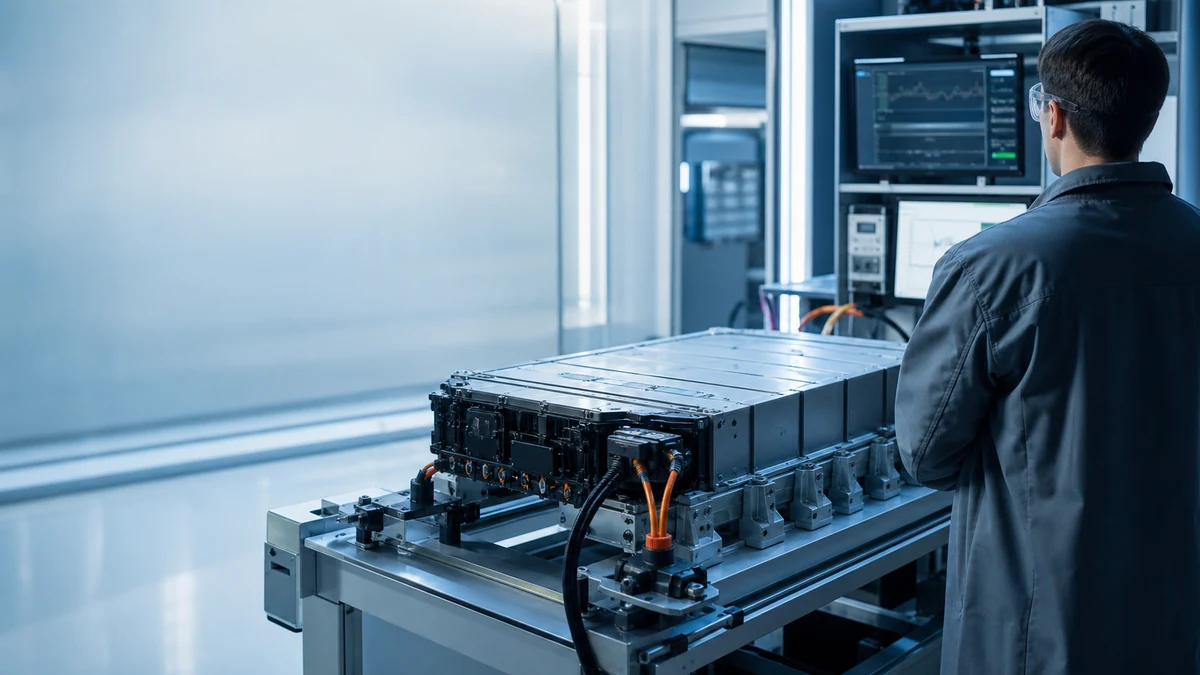
China’s GB/T 46991.1-2025 entered into force on 1 July 2026. The current recommended national standard concerns electrical endurance requirements and test methods for traction batteries in passenger vehicles. The associated official standard project information describes scope relating to light battery-electric vehicles and plug-in hybrid passenger vehicles, including on-board state-of-charge and state-of-energy information as part of the technical framework.
For the used-EV market, a standard like this is important because it helps create a common technical vocabulary for durability and testing. It does not make a second-hand vehicle’s battery condition visible by itself. A standard can describe how a test is conducted; it cannot replace a vehicle-specific diagnostic record, inspection result or warranty review.
Recommended does not mean automatic proof
The “GB/T” designation matters. This is a recommended national standard, not a statement that every vehicle on the road, every battery pack or every export listing automatically complies in the same way. Older vehicles were produced under different design and approval contexts. A vehicle might also have different history, software state, repair history, use pattern and storage conditions from another vehicle with the same model name.
For that reason, a serious buyer should avoid using a standard title as a substitute for evidence. An exporter should not claim that a used vehicle “meets” a standard unless the claim is tied to documented, applicable evidence and the claim’s scope is clear.
Questions to ask about a used EV battery
- What is the original Chinese model name and the exact VIN or agreed redacted identifier?
- What traction-battery chemistry and nominal capacity are recorded for this vehicle?
- Is there a recent diagnostic reading, battery-health report or inspection note? Who produced it, and on what date?
- What are the stated mileage, first-registration month and use history?
- Has the vehicle had a battery, high-voltage-system or collision repair? Ask for transparent disclosure and independent inspection where appropriate.
- Which range test standard is shown in the listing, and is it being compared fairly with destination-market figures?
- Does the destination country require a particular inspection, certificate, battery document or charging-interface treatment?
How this helps an overseas buyer
The value of the new standard is not a promise of residual range. Its value is that it reinforces a disciplined process: identify the vehicle correctly, separate standard-level information from vehicle-level evidence, and preserve the records that support an eventual purchase decision. That is useful for importers, dealers and fleet buyers who need to explain why one used EV was chosen over another.
At Yanxun Car, we recommend documenting the model name in Chinese as well as English, the first registration date, the published range standard, battery details where available and the agreed condition description. Final technical and commercial details should be checked against the source material and destination requirements before an order is agreed.
What this article does not say
- It does not certify the health, safety or export eligibility of any individual vehicle.
- It does not state that all existing vehicles were designed or tested under this standard.
- It is not legal, customs, insurance or destination-market compliance advice.
Source and methodology
Read the official standard record for GB/T 46991.1-2025 and the official standard project information. This article is Yanxun Car’s original buyer-oriented interpretation. See our used-EV export readiness checklist for the wider sourcing process.