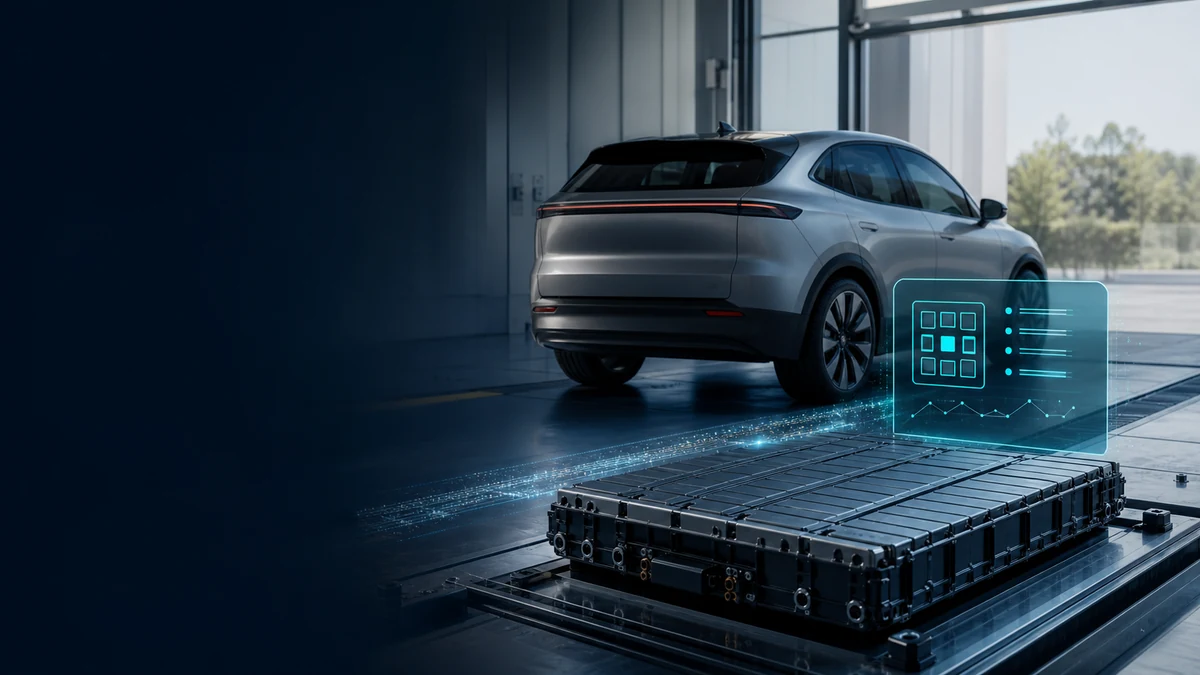
Updated 1 August 2026. The EU battery passport is becoming an important due-diligence topic for professional used-EV buyers. It is not a universal export document and it does not replace a vehicle inspection. It is, however, a useful prompt to ask for traceable battery information before a vehicle is quoted, shipped or offered in the EU.
The 2027 rule in plain English
Article 77 of Regulation (EU) 2023/1542 provides that, from 18 February 2027, each electric-vehicle battery placed on the EU market or put into service must have an electronic battery passport. The European Commission describes it as a QR-linked digital record that can cover battery identification, technical characteristics, performance and durability, repair and reuse information, and sustainability data.
The scope matters. The obligation sits with the economic operator that places the finished battery on the EU market. It is therefore not accurate to say that every used EV exported from China to every destination must already have a battery passport. For an EU-bound deal, buyers should identify the party responsible for EU market placement and confirm the destination-specific requirements before a purchase order is finalised.
What a battery passport can — and cannot — tell a buyer
The Regulation distinguishes information that is public from information available only to authorities or parties with a legitimate interest. Depending on the applicable category and access rights, individual-battery data can include state of health, battery status, charging and discharging cycles, negative events and recorded operating conditions. Buyers should not assume that every item will be visible through a public QR code, or that a single seller-provided “battery score” is comparable across makes and test methods.
The practical lesson is simple: ask for a dated, attributable record. The useful question is not “Is the battery good?” but “What test was performed, on what date, at what odometer reading, using which method, and what did the report measure?”
A compact evidence checklist before you buy
- Vehicle identity: VIN, first-registration record and the exact model/trim should agree across the sales contract, registration documents and inspection records.
- Battery identity: request battery chemistry, nominal capacity and battery-pack or serial identification where available; do not infer these from a model name alone.
- Battery condition: ask for a dated BMS or diagnostic report that names the method, odometer reading and result. Flag a missing report rather than inventing a health value.
- Events and repairs: request disclosure of repairs, water exposure, accident damage and thermal events, plus the supporting workshop record if it exists.
- Charging and destination use: confirm the physical connector, charging standard and destination-market solution before shipment. A range claim is not evidence of charging compatibility.
- Safety and conformity: ask for the relevant type-approval or conformity evidence for the destination. This is different from evidence of the present condition of a used vehicle.
Why a generic battery score is not enough
UN GTR No. 22 on in-vehicle battery durability underlines the value of comparable durability information. In a used-vehicle transaction, a score without a measurement date, method or vehicle mileage cannot be meaningfully compared with another score. Treat it as a starting point for inspection, not a warranty.
Likewise, UN Regulation No. 100 addresses safety requirements for battery-electric road vehicles; a conformity or type-approval document does not replace a current BMS diagnostic or an independent condition inspection.
How to use this checklist in a B2B quotation
At quotation stage, record the buyer’s destination, intended use and evidence requested. At pre-shipment stage, re-check that the VIN, registration date, battery information and agreed condition disclosures match the actual vehicle. Our used-car catalogue shows vehicle-level specifications, while final destination-market compatibility and documentation should always be confirmed for the individual transaction.
Sources and method
This original guide was prepared from the official texts linked above and the European Commission’s battery passport implementation overview. It is a commercial due-diligence guide, not legal or customs advice. Rules, access rights and market-entry requirements can change; obtain destination-specific professional advice before shipment.